WELCOME TO MARIO'S HOTEL IN FLORENCE

Welcome to Mario’s 3 Star Hotel in the Renaissance city of Firenze. With a cosy and friendly atmosphere and a great central location, Mario’s is a family run Guest House style hotel which offers comfort and service with a smile to guests from all over the world. Blending the old world charm of Florence in the fixtures and fittings of a 17th century building with the modern luxuries and comforts expected by today’s traveller, The Florentine hotel owners Leonardo and his brothers like to personally afford each and every guest that personal touch and leave you with happy memories of a pleasant and fruitful stay in Florence.
Visualizzazione post con etichetta Fiorentina. Mostra tutti i post

giovedì 14 ottobre 2010

TUSCAN CUISINE


Stay at Hotel Mario's!!! Our staff will help you in food and wine tasting......in living Tuscan customs!!!

Tuscan cuisine has a great tradition in the culture of the region. Tuscan people love good food. The cuisine is characterized by simple dishes made from healthy ingredients.

Among the characteristic features of Tuscan cuisine, we can find olive oil of excellent quality and the wise use of spices such as thyme, sage, rosemary, basil and tarragon. These spices are found in a variety of dishes, soups, meats, fish and desserts.

Tuscan culinary tradition is strongly influenced by the characteristics typical of the Tuscan landscape itself. Local seasonal vegetables such as fennel, artichokes, garlic and tomatoes are widely used. The humble bean, which grows beautifully in Tuscany, is used in many different ways to get tasty dishes such as beans with pork sausage.

Among other interesting local ingredients are the chestnuts, mushrooms, game (wild boar and pheasant) and fish from the Tyrrhenian Sea. These dishes are complemented by local wines such as Chianti and Brunello di Montalcino.

Many dishes have a close bond with poor cuisine of the past, a cuisine based mainly on the use of imaginative Tuscan unsalted bread and typical food of the times when people could not help but use their wits to make the best products available.

Tuscan cuisine includes also developed and sophisticated dishes. These include meats with a "dolceforte" ("sweet and strong") preparation, coming from the splendor of the Renaissance courts, where astounding guests was more important that satisfy the palate!

Every city has its own specialties. And this is easily found if one considers the many sweets and cakes typical holiday: the Gingerbread and Ricciarelli of Siena, the Cantucci of Prato (Prato typical sweet almond), the Chestnut (sweet chestnut flour typical of Lucca), the Zuccotto (typical of Florence) and Pie with Bischeri (a sweet Easter period, typical of Pisa, with rice, candied fruit, chocolate, raisins, pine nuts and liquor).

venerdì 25 giugno 2010

THE FLORENCE FLOOD: 4th of November 1966


"On November 4, 1966, in Florence the Arno river swollen with dark, muddy waters, spilled over sweeping away everything in its way. When the waters subsided, only destruction enveloped the city." (main source: the book "Florence flood 1996")

This flood, happened between the 3rd and 4th of November, was the worst of all in Florence and in the surrounding villages, due to the big quantity of water that flowed into all of the region, about the third part of the annual average ( about 200 litres for square metre ) and also because of the fact that the level of the Arno rose up to 11 metres.
The 4th of November flood, damaged not only the historic centre of Florence but also the zone of the Arno’s dock. Moreover, the surrounding fields continued to be flooded for many days after the disaster and a wide range of smaller communes were damaged heavily and also isolated.


The Chronicle Of The Drama

The last few days of October and the first ones of November were characterized from intense rainfalls, interrupted only from short clearings during the All Saints’ Day.
Even if during the following days the rainfalls continued and increased in intensity, the inhabitant of Florence weren’t worried because they can’t imagine the catastrophe that will happen, above all because they are accustomed to the autumnal floods of the near river and watercourses.
The victims were relatively few, because the horrible flood didn’t overtook them while they are going to work or while they are working in the fields, but the majority of them was at home to pass the 4th of November with their families.
3rd of November
In the evening: the first worrying news come from the Mugello and from the province of Arezzo ( Casentino, High Valdarno),where river and torrent have flooded.
At the Midnight: The River Arno begin its work of destruction, firstly in the zone of Casentino and High Valdarno , secondly in the zone of Incisa, where have to be interrupted the motorway of the Sun and the railway to Arezzo and Rome. In a second moment, the waters of the Arno flood the surrounding villages such as Montevarchi, Figline Valdarno, Incisa, Rignano sull’Arno,Pontassieve and many more. An episode to remember with sadness, happened in the zone of Reggello, is that of an habitation, where lived seven persons, completely destroyed by the flood.
4th of November
1:00: the Arno overflows in the zone of “la Liscia” in the commune of Lastra a Signa . The state road Tosco-Romagnola and the secondary ways between Florence and Empoli were interrupted.
3:00: the fury of the Arno reaches Florence.
3:30: The Arno breaks the levees in the zone of Rovezzano. Moreover, many quarters of Florence are flooded and there is the first victim of this natural catastrophe, a man called Carlo Maggiorelli, who was an overseer of the water establishments. In the historic centre the sewers and the cellars are being flooded.
From this moment, during all the night and also during the next day the situation becomes even more critical. In fact, the destructive strength of the water causes problems to the things and to the persons; maybe, among the damages to the things, those to the National Library and to the well known quarter of Santa Croce can be considered the most serious.
12:00: The worst moment of this drama for the artistic town of Florence, because the water reach the first floor of the buildings and the first victims are made known ( a couple of old persons and a young prisoner ) .
18:00: the River Arno begins slowly to return into its levees.
Finally, a strange image of a fact happened during the flood and filmed from all the means of communication, has been considered the symbol of this tragic day, that it is the image of a group of cows gathered at the first floor of the “Casa del popolo” in the zone of San Donnino, due to the attempt to save them.


About The Rescue Work - the "Angeli del fango"


The flood was the first episode in Italy that underlined the absolute lack of an efficient body for the civil protection. In fact, in this critical situation the first official helps arrived six days after the beginning of the catastrophe.
Luckily, there were some non-official helps that tried to solve the problems caused by the flood, such as a multitude of young voluntaries of various nationalities, called “ the angels of the mud “ , who came to Florence to save the books and the works of art from the destruction. However, the damage to the artistic and historical heritage was considerable, in fact in the storerooms of the National Library, thousands of precious volumes were completely destroyed and the world famous picture by Cimabue, the “ Christ Crucified “ was destroyed at its 80%, in spite of the subsequent restoration.
The only financial help from the government was of five- thousand-lira to the traders.
Finally, we haven’t to forget the documentary about the flood by the world-famous Franco Zeffirelli , very useful in the work of sensitisation, with the sorrowful call by the English actor, Richard Burton.

Florence, June 24: Florence celebrates the feast of its patron, San Giovanni.


THE HISTORY: FROM GOD MARTE TO SAN GOVANNI BATTISTA The choice of San Giovanni Battista as the Saint Patron of the city of Florence, comes only after the total transformation of the city to Christianity. Initially, the Patron (or Protector) of the city was the God Marte whose statue was located at the north entrance of Ponte Vecchio and remained there until 1333, when it was completely destroyed by the Arnio flooding.

Feast of the Patron of Florence: old cartIt was however in the Longobard period (6th to 7th century), that San Giovanni Battista was recognize as the Saint Patron of Florence. San Giovanni Battista was already chosen as the Saint Patron of the Longobard people. In fact, it is in this period that the San Giovanni Baptistery was reconstructed in Florence (6th-7th century) over the rubbles of what it once was the Marte Temple.

The selection of San Giovanni wasn't only first and foremost for his clear and brief pedagogy, but also for his strong and courageous personality. However, it was until June 24th in the 13th century that the first celebration dedicated to San Giovanni Battista took place.

Thanks to these celebrations the San Giovanni Baptistery and the Duomo Square became the city heart of the Religious and Political life of Florence. In fact,it is in front of the Baptistery that the festivities of June 24 end. History narrates that an ancient tradition asked to the Noble people of Florence to donate their big candles richly ornamented which had then to be burned in front of the Baptistery. Originally, the festivisty ended with a large candle that was transported in a wagon from Piazza Signoria to the front of the Baptistery. That same wagon named Carro di San Giovanni (San Giovanni's Wagon) gave birth to the Scoppio del Carro festivity (Wagon's Outburst); however, at a second stage, this festivity was devoted only to Easter ceremonies instead to the Patron.

giovedì 24 giugno 2010

Florence, June 24, 2010: Fireworks for Saint John


June 24th, it's a day where several festivities take palce in Florence throughout the day such as parades, the Rowing Club competition along the Arno river, fireworks, etc.

The final game of the Calcio in Costume (football soccer in costumes) was played on this same day. The famous Historic Florentine Football, was a peppy Medieval version of football, usually played in Santa Croce square. In 2006, the event was cancelled because an article of a document from the fifth council commission of sport and culture prohibits sporting events that cause violent celebrations by its fans. “The unjustify events that took place on the opening match of the 2006 edition, forced the Municipality of Florence to take action on this important sporting event.”

Along with the Historic Florentine Football, another sporting event is celebarted on this day. The Notturna di San Giovanni (night run marathon), it's one of the oldest marathons in Italian history.

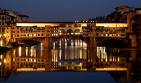
Firework show in Florence for the feast of the PatronIn order to salute the Saint Patron, at around 9:00pm, you can admire a firework show in Florence. The best spot to see them it's in Ponte Santa Trinita (Santa Trinita Bridge). From there you can see Ponte Vecchio (Old Bridge), and behind it the beautiful fireworks reflecting in the Arno river. The bridge and its surrounding streets gets jammed of people, so it is recommended that Florentine people having houses with view towards Piazzale Michelangelo open their doors to their friends and relatives, so you can enjoy the show in company of your loved ones.

Again, during the same weekend it is usually organized another funny event, concerning just one side of the city: Nottarno, la notte bianca in Oltrarno (Nottarno, the White Night in the Oltrarno zone). This year, the event is expected for Saturday 27 of June 2009. Various and different events will be organized and dislocated along the streets and squares of the city district, and have been already inserted in the program of the night (download the pdf of the program): music, exhibitions and various kinds of entertainment. On the occasion, shops, pubs and restaurants of the Oltrarno district stay open all night long and arrange tables on the streets of the centre.

domenica 18 aprile 2010

A TRIP TO FIESOLE


Mario's Hotel's staff helps you in visiting Fiesole.
Fiesole(Vipsul) was probably founded in the 9th-8th century BC, as it was an important member of the Etruscan confederacy, as may be seen from the remains of its ancient walls.
The first recorded mention on the town dates to 283 BC, when the town, then known as Faesulae, was conquered by the Romans. In pagan antiquity it was the seat of a famous school of augurs, and every year twelve young men were sent thither from Rome to study the art of divination. Sulla colonized it with veterans, who afterwards, under the leadership of Gaius Mallius, supported the cause of Catilina.
Fiesole was the scene of Stilicho's great victory over the Germanic hordes of the Vandals and Suevi under Radagaisus in 406. During the Gothic War (536-53) the town was several times besieged. In 539 Justinus, the Byzantine general, captured it and razed its fortifications.
It was an independent town for several centuries in the early Middle Ages, no less powerful than Florence in the valley below, and many wars arose between them; in 1010 and 1025 Fiesole was sacked by the Florentines, before it was conquered by Florence in 1125, and its leading families obliged to take up their residence in Florence.
By the 14th century, rich Florentines had countryside villas in Fiesole, and one of them is the setting of the frame narrative of the Decameron, also Boccaccio wrote the poem "Ninfale fiesolano". Robert Browning also mentions "sober pleasant Fiesole" several times in his poem, Andrea del Sarto.

sabato 17 aprile 2010

OUR STAFF HELPS YOU IN VISITING FLORENCE


Florence keeps an exceptional artistic heritage, marvelous evidence of its secular civilization.
The works of great Italian art, Cimabue, Giotto, Brunelleschi, Donatello, Leonardo, Michelangelo, are gathered in numerous museums including the Uffizi, a key step for those visiting the Tuscan capital.
Great monuments are the landmarks florentine artistic culture: the Baptistry, the Duomo, the medieval churches, the public and private buildings, monasteries and cloisters, monasteries and the Certosa.
World Heritage Site recognized by UNESCO in 1982, the historic center of Florence, enclosed by a circle of paths traced over the old medieval walls, collects the most important cultural heritage of the city.
The old town can be appreciated in its entirety from the surrounding hills, especially by the Forte Belvedere, from the Piazzale Michelangelo with the Romanesque Basilica of San Miniato al Monte and the hills of Fiesole, which offers one of the most beautiful views of Arno valley.

giovedì 15 aprile 2010

VASARI CORRIDOR


The Vasari Corridor (Italian: Corridoio Vasariano) is an elevated enclosed passageway in Florence, which connects the Palazzo Vecchio with the Palazzo Pitti. Beginning on the south side of the Palazzo Vecchio, it then joins the Uffizi Gallery and leaves on its south side, crossing the Lungarno dei Archibusieri and then following the north bank of the River Arno until it crosses the Ponte Vecchio. At the time of construction the Torre dei Mannelli had to be built around using brackets because the owners of the tower refused to alter it. The corridor covers up part of the façade of the chiesa di Santa Felicità. The corridor then snakes its way over rows of houses in the Oltrarno district, becoming narrower, to finally join the Palazzo Pitti. Most of it is closed to visitors.
The Vasari Corridor was built in 5 months by order of Grand Duke Cosimo I de' Medici in 1564, to the design of Giorgio Vasari. It was commissioned in connection with the marriage of Cosimo's son, Francesco, with Johanna of Austria. The idea of an enclosed passageway was motivated by the Grand Duke's desire to move freely between his residence and the government palace, when, like most monarchs of the period, he felt insecure in public, in his case especially because he had replaced the Republic of Florence. The meat market of Ponte Vecchio was moved to avoid its smell reaching into the passage, its place being taken by the goldsmith shops that still occupy the bridge. At the latter extremity, the corridor was forced to pass around the Mannelli's Tower, after the staunch opposition of that family to its destruction.
In the middle of Ponte Vecchio the corridor is characterized by a series of panoramic windows facing the Arno, in direction of the Ponte Santa Trinita. These replaced the smaller windows of the original construction in 1939, by order of Benito Mussolini.
After the Ponte Vecchio the Corridor passes over the loggiato of the church of Santa Felicita; at that point it had a balcony, protected by a thick railing, looking into the interior of the church, in order to allow the Grand Duke's family to follow services without mixing with the populace.

martedì 13 aprile 2010

Tonight semifinal vs Inter ( Coppa Italia )


Today we would like to talk about the Cup game Fiorentina, the local soccer team, is going to playing tonight vs Internazionale of Milan.
Firenze has a real passion for its team and all the city support with a great feeling the ViolaS. In Florence is almost impossible to find a person that is fan of another team.Usually in other cities people can be of a different team than the city he belongs to, but not here in Florence. Florence is Fiorentina. When you go to the bar or to some store, you often see people speaking about this club and Fiorentina's supporter are one of the hottest of all Italy.
Firenze has always supported the team, even when it was in the lower leagues because a real Florentine is not opportunist is constant with his love and so will be forever.

FORZA FIORENTINA, VINCI PER NOI!