
Visualizzazione post con etichetta hotel firenze. Mostra tutti i post
Visualizzazione post con etichetta hotel firenze. Mostra tutti i post
giovedì 9 settembre 2010
HOTEL MARIO'S - FLORENCE
The ornate renaissance building which houses Mario’s Hotel dates back to the 17th century, when it was the aristocratic residence of a noble of the great Florentine Republic and was converted into a hotel in 1872. Today, Mario's is still run by a Florentine family who have been in the hospitality industry for generations. Leonardo and his brothers will make sure that the 3 Star Hotel Mario's continues to remain the value for money, charming Florentine Guest House for which it is famous. Now refurbished and improved, through continuous change Mario’s Guest House is a perfect blend of charm and splendour from the cradle of the renaissance with modern customer service and with only 16 rooms we’re able to give each and every guest personal service.
The entire property is air conditioned and central heated, with 21st century insulation and a range of mod cons like power showers, international satellite TV and a Hotel Bar with internet point where you can relax and catch up on those emails. Business clients are welcome to use our fax and photocopier and will be pleased to know we’re located right by the Fortezza da Basso Exhibition Centre.


giovedì 26 agosto 2010
XXVII FIRENZE MARATHON - 28th november 2010, Running in Florence

Meeting on Sunday November, 28th 2010 with the 27th edition of the International classic road race
The wrapping glamour of centuries of art, history and culture accompanies you step by step along the 42 kilometres and 195 meters of the Florence Marathon. A unique emotion which can be told only by those who have run in Florence and which has made the classic race of Florence an appointment that cannot be missed by thousand of sportsmen and enthusiasts who each year punctually come from all over the world on the last Sunday in November. The Florentine event has gained exponential importance during the recent years, so much that on last November 29th on the occasion of its XXVI edition a new record of participants has been achieved with over 10.166 runners (7.425 Italians and 2.741 foreigners) coming from 57 countries.
The record of the men’s race has been established by the 24-year old Kenyan James Kutto who won his race in 2h08’41”: fourth time ever for the winner of an Italian marathon. A record has been achieved also with regard to the number of athletes crossing the finishing line: 8.206 runners. Amazing numbers, in witness of a development both numerical and qualitative, which has transformed the Florence Marathon into the second Italian marathon second to the Rome race.
An event, which is not only a sport event, but also a custom and cultural enchanting event. This is the common feeling joining thousands of runners and shared by the large audience of Raitre channel, watching the three-hour live broadcast of the XXVI Florence Marathon by Tgs-Raisport. This is the fifth consecutive year dedicated by Rai to the live broadcast of the Florentine event, as well-deserved appreciation of the growing importance this event has achieved during the recent years. Mentioning numbers only, however, won't convey the right value to a marathon which has now reached full excellence as to its organizational level and which can boast an exceptional stage such as the city of Florence, unique in the world for its beauty and atmosphere.
giovedì 20 maggio 2010
VIRTUAL TOUR: HOTEL MARIO'S - FIRENZE
L'hotel Mario's è a pochi metri dalla stazione ferroviaria di Firenze Santa Maria Novella. Si puo' definire un albergo molto romantico, un hotel attrezzatissimo per esigenti uomini di affari, un palazzo storico. E' formato da un numero complessivo di 16 camere. E' sempre aperto.
Si parlano diverse lingue, tra le quali il francese, l'inglese, lo spagnolo, il tedesco.
Si accettano bancomat, carte di credito.
Molti i servizi disponibili nelle camere: l'aria condizionata, tutte le stanze dotate di phon, i vostri oggetti di valore nella cassaforte in dotazione, presa modem per essere sempre online, un telefono disponibile in ogni camera, la TV per rilassarvi.
L'albergo offre svariati servizi: gli animali sono ben accetti, la struttura offre l'aria condizionata in tutti gli spazi comuni, in qualsiasi momento potrete usufruire del bar. Per i più piccoli dispone di un servizio di baby sitting.
La mattina iniziate bene la vostra giornata con un'abbondantissima colazione a buffet. Infine, per chi ha bisogno di tecnologie business, sono disponibili diversi servizi, tra cui: servizio WIFI per il collegamento al web, comoda sala riunioni.
lunedì 17 maggio 2010
AAAS10: ADVANCED ATMOSPHERIC AEROSOL SYMPOSIUM

From 14 to 17 March 2010 in the astonishing scenario of Florence the fourth International Conference on Safety and Environment in the Process Industry (CISAP4) will be held, thus giving continuation to the permanent biennial forum in the Italian country on HSE topics as well as industrial sustainability.
As in the past events, the principal aim of the Conference is to help the process industries to find out the best balance between the expected growth of the enterprise value and the safeguard of the health of employees and population, the safety of operations, the environmental protection.
I hope that this conference could provide both the platform for bringing together operators, researchers, consultants involved worldwide in optimizing the Safety and Environmental science and engineering and the opportunity for participants to learn about the latest developments, to improve communication and to increase cooperation and coordination among all the actors.
venerdì 23 aprile 2010
Florence Airport

To confirm the constant increase of the airport traffic of the last years nearby the airport of Florence Perentola, AdF Spa has begun during the first months of the 2006 the airport modernization.
With an investiment of about 11 milions of euro for the works on the runway and of about 4,5 milions of euro for the renovations of the air terminals AdF has so taken to the maxim operating efficiency the principals infrastuctures of the Florence airport and has increased the total capacity of the airport from 1.500.000 to 2.200.000 passengers/year.
To plan the new internal structure of the airstations, AdF has used particular attention to the improvement of the flow passengers in departure setting in a more rational way different operative and commercial services that the passengers find now along a more fluent way.
The security passages have been increased from 3 to 5, the boarding gates from 6 to 10. The conveyer claims have been increased from 2 to 3. The check-in desk have become 23.
domenica 18 aprile 2010
FORTEZZA DA BASSO


Mario's Hotel is very near Fortezza da Basso.
The great pentagonal mass of the Fortress of San Giovanni is known to everyone as the Fortress "Da Basso" because it is located on the river plain.
It was built around the medieval Porta Faenza beginning in 1534 by the great architect Antonio San Gallo the younger, and commissioned by the Duke Alessandro de' Medici, who wanted to create a kind of citadel of power. Indeed, in the original designs for the fortress, there was a palace to be constructed inside for the Prince himself. However, political considerations persuaded him to remain in the Medici family residence in Via Larga. The fortress was finished in 1537 and today is used as an exhibition center.
A TRIP TO FIESOLE
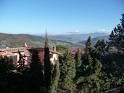

Mario's Hotel's staff helps you in visiting Fiesole.
Fiesole(Vipsul) was probably founded in the 9th-8th century BC, as it was an important member of the Etruscan confederacy, as may be seen from the remains of its ancient walls.
The first recorded mention on the town dates to 283 BC, when the town, then known as Faesulae, was conquered by the Romans. In pagan antiquity it was the seat of a famous school of augurs, and every year twelve young men were sent thither from Rome to study the art of divination. Sulla colonized it with veterans, who afterwards, under the leadership of Gaius Mallius, supported the cause of Catilina.
Fiesole was the scene of Stilicho's great victory over the Germanic hordes of the Vandals and Suevi under Radagaisus in 406. During the Gothic War (536-53) the town was several times besieged. In 539 Justinus, the Byzantine general, captured it and razed its fortifications.
It was an independent town for several centuries in the early Middle Ages, no less powerful than Florence in the valley below, and many wars arose between them; in 1010 and 1025 Fiesole was sacked by the Florentines, before it was conquered by Florence in 1125, and its leading families obliged to take up their residence in Florence.
By the 14th century, rich Florentines had countryside villas in Fiesole, and one of them is the setting of the frame narrative of the Decameron, also Boccaccio wrote the poem "Ninfale fiesolano". Robert Browning also mentions "sober pleasant Fiesole" several times in his poem, Andrea del Sarto.
sabato 17 aprile 2010
OUR STAFF HELPS YOU IN VISITING FLORENCE
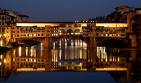
Florence keeps an exceptional artistic heritage, marvelous evidence of its secular civilization.
The works of great Italian art, Cimabue, Giotto, Brunelleschi, Donatello, Leonardo, Michelangelo, are gathered in numerous museums including the Uffizi, a key step for those visiting the Tuscan capital.
Great monuments are the landmarks florentine artistic culture: the Baptistry, the Duomo, the medieval churches, the public and private buildings, monasteries and cloisters, monasteries and the Certosa.
World Heritage Site recognized by UNESCO in 1982, the historic center of Florence, enclosed by a circle of paths traced over the old medieval walls, collects the most important cultural heritage of the city.
The old town can be appreciated in its entirety from the surrounding hills, especially by the Forte Belvedere, from the Piazzale Michelangelo with the Romanesque Basilica of San Miniato al Monte and the hills of Fiesole, which offers one of the most beautiful views of Arno valley.
domenica 11 aprile 2010
Piazzale Michelangelo: a panoramic view


Piazzale Michelangelo is a famous square with a magnificent panoramic view of Florence, Italy and is a popular tourist destination in the Oltrarno district of the city. The view from this most famous observation point of the city landscape has been reproduced in countless postcards and snapshots over the years.
It was built in 1869 and designed by architect Giuseppe Poggi on a hill just south of the historic center, on completion of retraining of the left bank of the shore. From that fact, Florence was the capital of Italy and the whole city was involved in an urban renewal, the so-called rehabilitation, or the rebirth of the city middle class: they were created lungarni; on the right bank, instead of the fourteenth-century walls were open the avenues of the ring of a boulevard, on the left bank was traced, wind on the hill of San Miniato, the Viale dei Colli, a street tree overview 8 kilometers long, at whose climax the square was built as a terrace with a panoramic view inside the city. The chronicle of the early construction of the company has been described in detail by the Italian journalist Peter Ferrigno (known under the name of Yorick) that does not fail to report as a part of Florence is dispiacesse "for the excessive spending of the construction.
The square Michelangelo square, dedicated to the great Renaissance artist Michelangelo, has copies of some of his famous works in Florence: the David and the four allegories of the Medici Chapel of San Lorenzo. These copies are made of bronze, while the originals are all in white marble. The monument was brought up by nine pairs of oxen on 25 June 1873.
Poggi designed the loggia in the neoclassical style that dominates the whole terrace, which today houses a panoramic restaurant. Originally it was supposed to house a museum of works by Michelangelo, ever. In the wall of the balcony, under the loggia, an epigraph is a banner characters reminiscent of his work: Florentine architect Giuseppe Poggi turn around here is his monument MCMXI.
The panorama encompasses the heart of Florence from Forte Belvedere to Santa Croce lungarni through the bridges of Florence and in sequence, especially the Ponte Vecchio, are the Duomo, Palazzo Vecchio, the Bargello and the octagonal bell tower of the Badia Fiorentina, without forgetting opposed to the hills north of the city with the center and Settignano Fiesole.
The square can be accessed by car along the tree-Viale Michelangelo, made in those same years, or walk the stairs going up the ramps of the monumental Piazza Poggi Poggi in the district of San Niccolò.
domenica 28 marzo 2010
Loggia del Porcellino ( the new market of Florence )

The loggia was built around the middle of the 16th century in the heart of the city, just a few steps from the Ponte Vecchio. Initially it was intended for the sale of silk and luxury goods and then for the famous straw hats, but today mainly leather goods and souvenirs are sold.
In the corner niches statues of famous Florentines were intended to be placed, but only three were made during the 18th century: Michele di Lando, Giovanni Villani, and Bernardo Cennini.
The focal point of the loggia is the Fontana del Porcellino, "fountain of the piglet", actually a copy of a bronze wild boar by Pietro Tacca from the sixteenth century; the original can be found at Palazzo Pitti. Popular tradition has it that rubbing the nose brings fortune, so that the statue has acquired over time a certain shine in that spot. Visitors are encouraged to place a coin in the mouth of the boar after rubbing its nose, and superstion implies that the wish will be granted if the offering tumbles through the grate whence the water flows. The slope of the grate is such that most coins do fall through, and are collected by the city.
Another oddity of the place is the so-called pietra dello scandalo, the "stone of the shame", a round spot marked in bicoloured marble at the centre of the loggia, which is only visible when no sales stalls are there. The design reproduces one of the wheels of a medieval Carroccio, symbol of the Florentine republic, on which the city's standard was hoisted daily. The Carroccio was placed on this spot and, around it, Florentine troops met before every battle.
The spot was later chosen for another purpose, whence its alternative name pietra dell'acculata, "the stone of the bum punishment". During the Renaissance, the punishment of insolvent debtors included being chained to a post on this spot and then paddled repeatedly on the naked buttocks.
sabato 27 marzo 2010
Santa Maria Novella: Gothic with Italian Renaissance facade

In front of the railway station and two minutes walking far from Hotel Mario's, we can see the Church of Santa Maria Novella, a beautiful example of Gothic with Italian Renaissance façade.
"...Designed in the 1450's, [the facade of Santa Maria Novella] completed the exterior of a medieval church, and yet it has been rightly described as a 'great Renaissance exponent of classical eurhythmia,' for its dimensions are all bound to each other by the 1:2 ratio of the musical Octave. The marble panels, which produce a mosaiclike effect of discrete color patches on medieval Italian church exteriors... here contribute to a sense of rhythmic, geometric unity..."
— Joan Gadol. Leon Battista Alberti, Universal Man of the Early Renaissance. Chicago: The University of Chicago Press, 1969. p112.
"From the trecento campaign, Alberti inherited the sepulchral niches with pointed arches, the lateral portals also enclosed by Gothic frames, and the geometrically patterned green and white marble revetment. It was this biochromatism—Tuscan Romanesque in origin and never out of favor in Florence—that Alberti chose as the departure for the revetment system of this new façade (c. 1456-70). Over it, he superimposed a series of tall and narrow arches to accommodate the vertical accent of the Gothic remnants. The arch and the capitals of the engaged order he shaped in a manner not Gothic but Romanesque-antique, thus making possible the introduction of the authoritative Classical language of the entrance, consisting of fluted pilasters framed by noble columns on tall dadoes—this in homage of the Roman Pantheon, a monument exhaustively studied by 'archaeologist' Alberti."
— Marvin Trachtenberg and Isabelle Hyman. Architecture: from Prehistory to Post-Modernism. p293-4.
San Lorenzo Central Market

San Lorenzo Central Market is at about two-three minutes from Mario's Hotel. The building was built some time between 1870 and 1874 by architect Giuseppe Mengoni and it is thought that it was built in part to provide an alternative for those who had shopped in the area around Piazza della Repubblica which at that time in history hosted the City of Florence's major vegetable market. According to history, the area around the Piazza della Repubblica was undergoing a renewal during these years.
It is Europe's largest covered food hall and is a most wonderful stone, iron and glass building. Mengoni is also responsible for Milan's celebrated covered shopping galleries.
It is difficult to appreciate the design of the Mercato though, one can imagine that in its day it probably was quite a site. The building's footprint is quite large and covers at least two blocks. The Mercato offers a huge variety of fresh items: produce of many kinds (from throughout Italy), fresh fruit, flowers, cheese of every imaginable variety, meats (including stewed boar, cow stomach and intestines), fish and seafood, poultry, pastas, dried fruits, porcini, spices, breads, pastries, dry goods, wines and truffles. There are also stands inside where you can have the vendor make you a sandwich and you can sit down at a little table and enjoy the atmosphere.
venerdì 26 marzo 2010
Train station in Florence : Santa Maria Novella

In the second half of the nineteenth century, railway stations were the most eloquent witnesses of the fruitful collaboration between the sciences, technology and art. Although the buildings were often beautifully and carefully designed (some even resembled basilicas), they were nonetheless difficult to integrate into the urban fabric. The station Maria Antonia, for instance, was erected withing the city walls, behind the church of Santa Maria Novella, thus opening a "new door" to the city. It was founded on 3 February 1848, and consisted of a number of separate buildings. The facade of the central building had four large round arches, which allowed one to see from the outside in, and vice versa, as if the architect had wished to emphasise the interpenetration of city and station. It had four tracks, and served as the point of departure of the Florence-Prato-Pistoia railway. The other Florentine Station, the "Stazione Leopolda", was also build in 1848. After the unification of Italy, the Station of Maria Antonia was rebaptised the Station of Santa Maria Novella. A new station was built during the 30s. “Maria Antonia” station was demolished to make way for the present station facing the church of Santa Maria Novella: a masterpiece of rationalist architecture, one of the finest expressions of the modern movement in Italian architecture.
Firenze Santa Maria Novella has amongst the most architecturally significant recent buildings of any Italian railway station.in 1932 a national competition was launched for the design of the new Travellers Building. It was won by the Tuscan Group of architects headed by Giovanni Michelucci and including Baroni, Berardi, Gamberini, Guarnieri and Lusanna. The station was opened in 1935: its chief features are the spacious entrance hall with its glass and steel roof structure and the main gallery, whose functional layout heralds the one later built in Roma. Its outer facings and finishings reflect the materials and colours of the city around it, while its interior is adorned with important artworks including sculptures by Italo Griselli and paintings by Ottone Rosai and Mario Romoli.
The plan of the building, as seen from above, was based on the fascio littorio, the symbol of Mussolini's fascist movement. The building is one of the key works of Italian modernism, but has little to do with the Italian Rationalism movement, being more strongly influenced by the Viennese architecture of Loos and Hoffman, with perhaps a nod to Wright; but it is the building's complete originality that makes it outstanding.While it is of a 'modern' design, the use of pietra forte for the station's stone frontage was intended to respond to and contrast with the nearby
Gothic architecture. It is a style of architecture which flourished during the high and late medieval period. It evolved from Romanesque architecture and was succeeded by Renaissance architecture of the church of Santa Maria Novella.
The train station is used by 59,000,000 people every year and is one of the most important in Italy.
It is at the northern end of the Florence–Rome direttissima, which was completed on 26 May 1992 and the southern end of the Bologna–Florence Direttissima, opened on 22 April 1934. A new high speed line to Bologna opened on 13 December 2009. The station is also used by regional trains on lines connecting to Pisa, Livorno, Lucca, Viareggio, Bologna and Faenza.
Hotel Mario's is just some metres far away from this beautiful train station and to get here is an easy walk from the station. You cannot imagine how close is. We are in a wonderful position, because off from the noisy of the around of every train station of the world.
Iscriviti a:
Post (Atom)

 Post
Post

