Historical Florentine Hotel in the heart of Florence
WELCOME TO MARIO'S HOTEL IN FLORENCE
Welcome to Mario’s 3 Star Hotel in the Renaissance city of Firenze. With a cosy and friendly atmosphere and a great central location, Mario’s is a family run Guest House style hotel which offers comfort and service with a smile to guests from all over the world. Blending the old world charm of Florence in the fixtures and fittings of a 17th century building with the modern luxuries and comforts expected by today’s traveller, The Florentine hotel owners Leonardo and his brothers like to personally afford each and every guest that personal touch and leave you with happy memories of a pleasant and fruitful stay in Florence.
The ornate renaissance building which houses Mario’s Hotel dates back to the 17th century, when it was the aristocratic residence of a noble of the great Florentine Republic and was converted into a hotel in 1872. Today, Mario's is still run by a Florentine family who have been in the hospitality industry for generations. Leonardo and his brothers will make sure that the 3 Star Hotel Marios continues to remain the value for money, charming Florentine Guest House for which it is famous. Now refurbished and improved, through continuous change Mario’s Guest House is a perfect blend of charm and splendour from the cradle of the renaissance with modern customer service and with only 16 rooms we’re able to give each and every guest personal service.
Palazzo Davanzati is a palace in Florence. It houses the Museum of the Old Florentine House.
Palazzo Davanzati was erected in the second half of the 14th century
by the Davizzi family, who were wealthy members of the wool guild. In 1516
it was sold to the Bartolini and, later that century, to the Davanzati
family, also rich merchants (1578), who held it until 1838. After the
suicide of Carlo Davanzati, it was split into different quarters and
modified. After escaping the numerous demolitions of 19th century
Florence, it was bought by Elia Volpi, an antiquarian, who restored in
(his impression of) the original style.
In 1910, Volpi opened the building as a private museum (Museo Privato
della Casa Fiorentina Antica). The contents of this museum kept
changing as Volpi sold the furniture at auctions, including in a major
sale of 1916 in New York. In the 1920s, Egyptian antique dealers Vitale
and Leopoldo Bengujat acquired the building and its contents. In 1951 it
was purchased by the Italian state and kept open as a museum. In 1995
it was closed for major restoration to consolidate the building that was
falling down. The museum was partially reopened in 2005; the ground and
first floors can now be visited.
The palace consists of a facade that unifies a grouping of earlier,
medieval tower homes that the owner purchased with the intent to put
them together.
It is constructed in sandstone, with three large portals on the horizontal axis, and three stories of mullioned windows. The topmost floor has a loggia
supported by four columns and two pilasters that was added in the 16th
century. The façade displays the Davanzati coats of arms and has traces
of other decorations.
The interior courtyard has arches, vaults, and capitals in 14th century-style.
E’ il fascino avvolgente di secoli di arte, storia e cultura che ti accompagna, passo dopo passo, lungo i 42 chilometri e 195 metri della Firenze Marathon. Un’emozione unica che solo chi ha corso a Firenze può raccontare e che ha trasformato la classica della città del giglio in un appuntamento irrinunciabile per migliaia di sportivi e appassionati provenienti da tutto il mondo, puntuale ogni anno, l’ultima domenica di novembre.
L’evento fiorentino è cresciuto in maniera esponenziale in questi ultimi anni, tanto che lo scorso 28 novembre in occasione della XXVII edizione è stato centrato il nuovo record di iscritti, con 10200 podisti provenienti da 62 paesi. Numeri impressionanti, a testimonianza di una crescita che non è solo numerica, ma anche qualitativa, che hanno trasformato la Firenze Marathon nella seconda maratona italiana, alle spalle soltanto di Roma.
Una manifestazione che non è solo un evento sportivo, ma anche un fatto di costume e di cultura davanti a cui non si può che restare incantati. E’ questa la sensazione che ha accomunato migliaia di podisti e che hanno potuto provare anche i tanti spettatori collegati suRaisport1, per seguire le tre ore di diretta riservatealla XXVII Firenze Marathon dalla Tgs-Raisport. E’ il settimo anno consecutivo che la Rai dedica la diretta alla manifestazione fiorentina, a giusto riconoscimento della crescente importanza assunta dall’evento in questi anni. Parlare solo di numeri, però, non renderebbe il giusto merito ad una maratona che ha raggiunto ormai un livello organizzativo di assoluta eccellenza e che può vantare un palcoscenico eccezionale come Firenze, una città unica al mondo per la sua bellezza e per la sua atmosfera.
La Firenze Marathon è il principale evento di corsa su strada che si svolge in Toscana e, insieme a Roma, è ormai di diritto la maratona internazionale più importante d'Italia e tra le prime 20 al mondo per numero di partecipanti e per qualità.
Il percorso fiorentino si muove attraverso scorci paesaggistici e monumenti di una bellezza unica, che hanno reso famosa la città nel mondo. Un nuovo tracciato che tocca i luoghi più affascinanti di Firenze, come piazza del Duomo, piazza della Signoria, Ponte Vecchio e tante altre strade e piazze ricche di storia e di cultura, prima di concludersi nella solenne maestosità di piazza Santa Croce. Il percorso è senza dislivelli, come previsto dalle norme IAAF, e sempre su strade asfaltate, caratteristiche che lo rendono particolarmente scorrevole e apprezzato da tutti gli atleti. La Firenze Marathon è inserita nel calendario ufficiale delle maratone internazionali, certificata AIMS e riconosciuta dalla IAAF.
Sunday, 27th November 2011, is the date of the 2011 edition of the international classic road race, the 28th Florence Marathon. Step by step all along its 42 kilometers and 195 meters you are surrounded by centuries of art, history and culture, a unique emotion that can only be experienced by those who run in Florence. Year after year, thousands of sportspeople and enthusiasts from all over the world come to participate in this classic race on the last Sunday in November. This great event in Florence has increased immeasurably recently so much so that we expect more than 11.500 participants in 2011.
This extraordinary increase in participation also testifies to the constant attention given to the organization of the race. Florence Marathon is now the second Italian marathon (after Rome), and among the 20 most important marathons in the world. The route takes you by all those landmarks of singular beauty that have made Florence famous worldwide: views over the enchanting hills and countryside, and passing right by the Cathedral Square, Piazza della Signoria, Ponte Vecchio (to mention only just a few of historical importance), before entering the majestic Piazza Santa Croce. The road is entirely asphalted and ramp-free, except for the short, slightly sloping stretch of road at the start, and these characteristics make it a particularly fast route appreciated by runners.
Florence was established by Lucius Cornelius Sulla in 80 BC as a settlement for his veteran soldiers and was named originally Fluentia, owing the fact that it was built between two rivers, which was later corrupted to Florentia. It was built in the style of an army camp with the main streets, the cardo and the decumanus, intersecting at the present Piazza della Repubblica. Situated at the Via Cassia, the main route between Rome and the north, and within the fertile valley of the Arno, the settlement quickly became an important commercial centre. The Emperor Diocletian is said to have made Florentia the seat of a bishopric around the beginning of the 4th century AD, but this seems impossible in that Diocletian was a notable persecutor of Christians.
In the ensuing two centuries, the city experienced turbulent periods of Ostrogothic rule, during which the city was often troubled by warfare between the Ostrogoths and the Byzantines, which may have caused the population to fall to as few as 1,000 people. Peace returned under Lombard rule in the 6th century. Florence was conquered by Charlemagne in 774 and became part of the Duchy of Tuscany, with Lucca as capital. The population began to grow again and commerce prospered. In 854, Florence and Fiesole were united in one county.
Calcio Storico Fiorentino ("Historic Florentine Football"), sometimes called Calcio in costume, is a traditional sport, regarded as a forerunner of soccer, though the actual gameplay most closely resembles rugby. The event originates from the Middle Ages, when the most important Florentine nobles amused themselves playing while wearing magnificent costumes. The most important match was played on 17 February 1530, during the siege of Florence. That day Papal troops besiged the city while the Florentines, with contempt of the enemies, decided to play the game notwithstanding the situation. The game is played in the Piazza di Santa Croce. A temporary arena is constructed, with bleachers and a sand-covered playing field. A series of matches are held between four teams representing each quartiere (quarter) of Florence during late June and early July. There are four teams: Azzurri (light blue), Bianchi (white), Rossi (red) and Verdi (green). The Azzurri are from the quarter of Santa Croce, Bianchi from the quarter of Santo Spirito, Verdi are from San Giovanni and Rossi from Santa Maria Novella.
During the summer, Florence became a big open air stage where they are often tourists, visitors to play the part of the protagonists. With its squares, its churches and monuments to admire without getting bored, Firenze is ideal for young couples, families and groups of friends.
First we start with some advice. Florence in the summer is a very hot city, then try to limit your outputs to the cooler hours, preferring perhaps visiting museums and places indoors during the time when the sun is strongest. Of course this advicehas to be applied to European tourists, because those Americans are certainly more accustomed to high temperatures. Ultimately the climate of Florence is still a Mediterranean climate.
We start from the center. Just a few months ago the entire area around the Piazza del Duomo, the Cathedral of Santa Maria del Fiore with Giotto‘s frescoes, the famous dome of Brunelleschi and the Baptistery, had been pedestrianized. This is a great scene, one of the marvels of humanity, even more enjoyable now breathing cleaner air and less noise.
From here I awant to create two paths. The first takes you through the Via dei Calzaioli, where are boutiques of fashion: Gucci, Prada, Valentino and so on. A pause in Piazza della Repubblica, sipping a coffee at one of the famous bars, where the artists of the vanguard of primo novecento The second route takes you from the Duomo to Borgo San Lorenzo, where it is to be visited the Church designed by Michelangelo and the museums of the Medici Chapels. Spread around a small market of leather handicrafts made by Florentine artisans. Bags, shoes, girdles, jackets. Here is a must to visit the Central Market, where you’ll find the authentic flavors of Tuscan cuisine and especially the Florentine. It starts primarily from meat, queen of the tables in the restaurants. The famous Fiorentina Cut, a cut of rib eye steak, cooked on the outside and rare inside.
You eat natural, or with oil and pepper, served with arugula and shavings of Parmesan cheese or perhaps with a beautiful chapel of fresh porcini mushrooms. At Central Market of San Lorenzo, a small restaurant offers some of the best specialty of Florence, at really low prices.
Try the sandwich with Lampredotto, or the one with the Bollito, tripe, Peposa and other dishes prepared daily. Then in the market you will find spices, cheese, bread and cake for all tastes.
Many special exhibitions are also organized this year in Florence. Four hundred years after his death, Michelangelo Merisi in the Uffizi, along with Leonardo, Raphael, Michelangelo and Botticelli. Then the largest collection by many artists of the Reinassance period.
As known, Merisi painted, for Maffeo Barberini, a Sacrificio di Isacco (1603, Florence, Uffizi) where the sacrificial action takes place in full sunlight. In many copies the same subject is treated in night-time light, possibility to hypothesize the existence of a lost archetype by Caravaggio. Coming from a Neapolitan private collection, this painting was sold by Christie's in 1989 as “copy of Caravaggio”, with an attributive proposal to Tommaso Salini by Giuliano Briganti. The reading of the canvass however was jeopardized by oxidized paints and vast repainting. After the purchase, a first radiographic investigation showed as the knife’s execution overlapped the hand and the sleeve – main topic in the execution technique by Caravaggio. But before the necessary cleaning, the painting disappeared in the antiquarian market’s meanders. Still in 1989 Mina Gregori recognized in the painting in Barbara Piasecka Johnson’s collection Caravaggio autograph of the night-time Sacrificio di Isacco, identifying it with the work inventoried in 1700 among Doña Antonia Cecilia Fernàndez de Hijar’s goods. Provocatively published by Maurice Marini as “copy?”, this work was found in 2006 in Modena private collection. Restored in 1995, it was submitted to diagnostic analysis in 2007. Compared to Johnson’s version’s investigations, the results demonstrate a concomitant free hand execution in the two paintings because of the presence of work in progress homologous repentances. The two autograph versions differentiate in the choice of the night moment, nearer to the dawn in Johnson painting. A copy of this painting is exhibited in the Cathedral at Castellammare di Stabia. Another one is at Panafiel (Valladolid, Spain), probably sent in his feud by Don Pedro Giron, Spanish ambassador in Rome up to 1616 and probably the first owner of the work. He was also viceroy in Naples, where he left the “night-time” original, once back to Spain in 1620.
Hotel Mario's............the place of Florentine style!!!
Florence has a legendary artistic heritage. Cimabue and Giotto, the fathers of Italian painting, lived in Florence as well as Arnolfo and Andrea Pisano, renewers of architecture and sculpture; Brunelleschi, Donatello and Masaccio, forefathers of the Renaissance, Ghiberti and the Della Robbias, Filippo Lippi and Angelico; Botticelli, Paolo Uccello and the universal genius of Leonardo da Vinci and Michelangelo.
Their works, together with those of many other generations of artists, are gathered in the several museums of the town: the Uffizi Gallery, the Palatina gallery with the paintings of the "Golden Ages", the Bargello with the sculptures of the Renaissance, the museum of San Marco with Fra Angelico's works, the Academy, the chapels of the Medicis, Buonarroti' s house with the sculptures of Michelangelo, the following museums: Bardini, Horne, Stibbert, Romano, Corsini, The Gallery of Modern Art, the Museo dell'Opera del Duomo, the museum of Silverware and the museum of Precious Stones. The "Circumcision of Jesus", a Renaissance painting by Andrea Mantegna.
Great monuments are the landmarks of Florentine artistic culture: the Florence Baptistery with its mosaics; the Cathedral with its sculptures, the medieval churches with bands of frescoes; public as well as private palaces: Palazzo Vecchio, Palazzo Pitti, Palazzo Medici Riccardi, Palazzo Davanzati; monasteries, cloisters, refectories; the "Certosa". In the archeological museum includes documents of Etruscan civilization. In fact the city is so rich in art that some first time visitors experience the Stendhal syndrome as they encounter its art for the first time. The 15th century early-Renaissance frescos in the Cappella dei Magi in the Palazzo Medici-Riccardi.
The Florentines – perhaps most notably Filippo Brunelleschi (1377–1466) and Leon Batist'Alberti (1404–1472) – invented both Renaissance and Neoclassical architecture, which revolutionized the way Rome, London and Paris and every other major city in Europe – from Barcelona to St. Petersburg – were built. The cathedral – one of the largest churches, topped by Brunelleschi's dome, dominates the Florentine skyline. The Florentines decided to start building it – late in the 13th century – knowing they did not know how they were going to do it. It was "technology forcing" – like the Kennedy Administration's decision to put a man on the moon. The dome was the largest ever built at the time, and the first major dome built in Europe since the two great domes of Roman times – the Pantheon in Rome, and Hagia Sophia in Constantinople. As a matter of fact, as mentioned in sections above, the Santa Maria del Fiore dome remains the largest brick dome of its kind in the world. In front of it is the medieval gem of the Baptistery, where every Florentine was baptized until modern times. The two buildings incorporate in their decoration the transition from the Middle Ages to the Renaissance. In recent years, most of the important works of art from the two buildings – and from the wonderful Bell Tower, designed by Giotto, have been removed and replaced by copies. The originals are now housed in the spectacular Museum of the Works of the Duomo, just to the east of the Cathedral.
Florence has large numbers of art-filled churches, such as San Miniato al Monte, San Lorenzo, Santa Maria Novella, Santa Trinita, the Brancacci Chapel at Santa Maria della Carmine, Santa Croce, Santo Spirito, SS Annunziata, Ognissanti and many more. The Palazzo della Signoria, better known as the Palazzo Vecchio (English:The Old Palace).
And that is without mentioning any "artists". From Arnolfo and Cimabue to Giotto, Nanni di Banco, and Uccello; through Lorenzo Ghiberti, and Donatello and Massaccio and the various della Robbias; through Fra Angelico and Botticelli and Piero della Francesca, and on to Michelangelo and Leonardo da Vinci, the Florentines have dominated the visual arts in a great way. And this list does not include many who, in any other place would be considered among the greatest of artists, but in Florence must be considered among the near-great: Benvenuto Cellini, Andrea del Sarto, Benozzo Gozzoli, Domenico Ghirlandaio, Fra Lippo Lippi, Buontalenti, Orcagna, Pollaiuolo, Filippino Lippi, Verrocchio, Bronzino, Desiderio da Settignano, Michelozzo, the Rossellis, the Sangallos, Pontormo, just to name a few. And this list does not include the prolific Ignoto. Nor does it include the near-Florentines, such as Raphael, Andrea Pisano, Giambologna, the wonderfully nicknamed Sodoma and so many more, such as Peter-Paul Rubens — all of whom spent time in Florence and were nurtured by it. The statue of Perseo by Cellini in the Loggia dei Lanzi.
Then there are the art galleries. The Uffizi and the Pitti Palace are two of the most famous picture galleries in the world. But the heart and soul of Florence are in the two superb collections of sculpture, the Bargello and the Museum of the Works of the Duomo. They are filled with the brilliant, revolutionary creations of Donatello, Verrochio, Desiderio da Settignano, Michelangelo and so many other masterpieces that create a body of work unique in the world. And, of course, there is the Accademia, with Michelangelo's David – perhaps the most well-known work of art anywhere, plus the moving unfinished statues of the slaves Michelangelo created for the tomb of Pope Julius II.
In all, Florence has a great and numerous amount of museums. Among those at the top of most lists – other than those above – are: the impressive medieval city hall, the Palazzo della Signoria (a.k.a Palazzo Vecchio), a wonderful building with magnificent rooms and some great art; the Archeological Museum, the Museum of the History of Science, the Palazzo Davanzatti, the Stibbert Museum, St. Marks, the Medici Chapels, the Museum of the Works of Santa Croce, the Museum of the Cloister of Santa Maria Novella, the Zoological Museum ("La Specola"), the Bardini, and the Museo Horne. There is also a wonderful collection of works by the modern sculptor, Marino Marini, in a museum named after him. If photography is your interest, you should not miss the superb collection of works by the early photographers, the Alinari brothers. The magnificent Strozzi Palace is also the site of many special exhibits.
Hotel Mario's is very near to the most important spots in Florence!!! Ask the staff and your stay will be amazing!!!
Santa Maria del Fiore: The fourth largest church in Europe, its length being 153 metres (502 ft) and its height 116 metres (381 ft).
San Giovanni Baptistery: Located in front of the Florence Cathedral, it is decorated by many artists, notably by Lorenzo Ghiberti with the Gates of Paradise.
Basilica of Santa Maria Novella: Located in Santa Maria Novella square (near the big Firenze Santa Maria Novella railway station) this contains works by Masaccio, Paolo Uccello, Filippino Lippi and Domenico Ghirlandaio. The great façade was made by Leon Battista Alberti.
Basilica of Santa Croce: The principal Franciscan church in Florence, Italy, and a minor basilica of the Roman Catholic Church. It is situated on the Piazza di Santa Croce, about 800 metres south east of the Duomo. The site, when first chosen, was in marshland outside the city walls. It is the burial place of some of the most illustrious Italians, such as Michelangelo, Galileo, Machiavelli, Foscolo, Gentile, Rossini, and Marconi, thus it is known also as the Temple of the Italian Glories (Tempio dell'Itale Glorie).
San Marco: A complex comprising a church and a convent. The convent, which is now a museum, has three claims to fame: during the 15th century it was home to two famous Dominicans, the painter Fra Angelico and the preacher, Girolamo Savonarola. Also housed at the convent is a famous collection of manuscripts in a library built by Michelozzo.
Basilica of San Lorenzo: One of the largest churches of Florence, Italy, situated at the centre of the city's main market district, and the burial place of all the principal members of the Medici family from Cosimo il Vecchio to Cosimo III.
Santo Spirito: Located in the Oltrarno quarter, facing the square with the same name. The building on the interior is one of the pre-eminent examples of Renaissance architecture.
Orsanmichele: This building was constructed on the site of the kitchen garden of the monastery of San Michele, now gone.
Santissima Annunziata: A Roman Catholic basilica and the mother church of the Servite order. It is located on the north-eastern side of the Piazza Santissima Annunziata.
Ognissanti: Founded by the lay order of the Umiliati, this was among the first examples of Baroque architecture built in the city. Its two orders of pilasters enclose niches and windows with fantastical cornices. To the left of the façade is a campanile of thirteenth and fourteenth-century construction.
Santa Maria del Carmine: in the Oltrarno district of Florence, it is famous as the location of the Brancacci Chapel, housing outstanding Renaissance frescoes by Masaccio and Masolino da Panicale, later finished by Filippino Lippi.
Santa Trinita: It is the mother church of the Vallumbrosan Order of monks, founded in 1092 by a Florentine nobleman. Nearby is the Ponte Santa Trinita over the river Arno. The church is famous for its Sassetti Chapel, containing notable frescoes by Domenico Ghirlandaio.
Medici Chapel in San Lorenzo: The Medici Chapel are the resting place of most of the Medici as Grand Dukes of Tuscany. One is the Sagrestia Nuova, the "New Sacristy", designed by Michelangelo. The other is the Capella dei Principi, the 16th and 17th-century "Chapel of the Princes", which is entirely covered with a revetment of colored marbles inlaid with pietra dura.
San Marco: Comprises a church and a convent. The convent, which is now a museum, has three claims to fame: In the 15th century, it was home to two famous Dominicans, the painter Fra Angelico and the preacher, Girolamo Savonarola. Also housed at the convent is a famous collection of manuscripts in a library built by Michelozzo.
Santa Felicita: is a church in the downtown, probably the oldest in the city after San Lorenzo. Badia Fiorentina Famous as the parish church of Beatrice Portinari, the love of Dante's life, and the place where he watched her at mass, for Dante grew up across the street in what is now called the 'Casa di Dante', rebuilt in 1910 as a museum to Dante.
San Gaetano: One of the most important examples of the Baroque style in Florence, a city better known for its Renaissance architecture.
San Miniato al Monte: Standing at one of the highest points in the city, this has been described as the finest Romanesque structure in Tuscany and one of the most beautiful churches in Italy.
Florence Charterhouse: A charterhouse, or Carthusian monastery, located in the Florence suburb of Galluzzo, in central Italy. The building is a walled complex located on Monte Acuto, at the point of confluence of the Ema and Greve rivers.
Great Synagogue of Florence: A magnificent synagogue built between 1874 and 1882. The design integrates Islamic and Italian architectural traditions.
Reserve a room at Hotel Mario's!!! The staff is very helpful and gives you many advices!!!
The city lies on the River Arno and is known for its history and its importance in the Middle Ages and in the Renaissance, especially for its art and architecture. A centre of medieval European trade and finance and one of the richest and wealthiest cities of the time, Florence is considered the birthplace of the Italian Renaissance; in fact, it has been called the Athens of the Middle Ages. It was long under the de facto rule of the Medici family. From 1865 to 1870 the city was also the capital of the Kingdom of Italy.
The historic centre of Florence attracts millions of tourists each year and was declared a World Heritage Site by UNESCO in 1982. Florence is widely regarded as one of the most beautiful cities in the world, and its artistic, historic and cultural heritage and impact in the world remains vast up to this day. The city has also a major European impact in music, architecture, education, cuisine, fashion, philosophy, science and religion. The historic centre of Florence contains numerous elegant squares (piazzas), Renaissance palaces (palazzi), academies, parks, gardens, churches, monasteries, museums, art galleries and ateliers. The city has also been nominated, according to a 2007 study, as the most desirable destination for tourists in the world.
The city boasts a wide range of collections of art, especially those held in the Pitti Palace and the Uffizi, (which receives about 1.6 million tourists a year). Florence is arguably the last preserved Renaissance city in the world and is regarded by many as the art capital of Italy. It has been the birthplace or chosen home of many notable historical figures, such as Dante, Boccaccio, Leonardo da Vinci, Botticelli, Niccolò Machiavelli, Brunelleschi, Michelangelo, Donatello, Galileo Galilei, Catherine de' Medici, Antonio Meucci.
Meeting on Sunday November, 28th 2010 with the 27th edition of the International classic road race The wrapping glamour of centuries of art, history and culture accompanies you step by step along the 42 kilometres and 195 meters of the Florence Marathon. A unique emotion which can be told only by those who have run in Florence and which has made the classic race of Florence an appointment that cannot be missed by thousand of sportsmen and enthusiasts who each year punctually come from all over the world on the last Sunday in November. The Florentine event has gained exponential importance during the recent years, so much that on last November 29th on the occasion of its XXVI edition a new record of participants has been achieved with over 10.166 runners (7.425 Italians and 2.741 foreigners) coming from 57 countries. The record of the men’s race has been established by the 24-year old Kenyan James Kutto who won his race in 2h08’41”: fourth time ever for the winner of an Italian marathon. A record has been achieved also with regard to the number of athletes crossing the finishing line: 8.206 runners. Amazing numbers, in witness of a development both numerical and qualitative, which has transformed the Florence Marathon into the second Italian marathon second to the Rome race. An event, which is not only a sport event, but also a custom and cultural enchanting event. This is the common feeling joining thousands of runners and shared by the large audience of Raitre channel, watching the three-hour live broadcast of the XXVI Florence Marathon by Tgs-Raisport. This is the fifth consecutive year dedicated by Rai to the live broadcast of the Florentine event, as well-deserved appreciation of the growing importance this event has achieved during the recent years. Mentioning numbers only, however, won't convey the right value to a marathon which has now reached full excellence as to its organizational level and which can boast an exceptional stage such as the city of Florence, unique in the world for its beauty and atmosphere.
Grand Prix are easily the biggest open events the DCI offers. They're high-energy and held around the world. Plus, no invitation is necessary – anyone can attend. No pro points? No problem. Playing a good game is all that matters, and with Pro Tour invitations down to 16th place and cash prizes all the way down to 64th place, one thing is certain: a Grand Prix is sure-fire great time. Plus each participant gets an alternate art Umezawa's Jitte. Players or teams with high ratings or Pro Players Club levels can earn byes for Grand Prix tournaments. You can also earn byes at Grand Prix Trials. Major Magic: The Gathering events are held around the world every year. Find a location near you and see how you stack up against the best players in the world! Grand Prix tournaments are open to the public. Pro Tours and World Championships are invitation-only for the main event but feature multiple open tournaments as well. Choose Hotel Mario's for your stay at Florence: the hotel is three minutes walking from Fortezza da Basso and ten minutes from the most important places in the town.
Fiesole (Vipsul) was probably founded in the 9th-8th century BC, as it was an important member of the Etruscan confederacy, as may be seen from the remains of its ancient walls.
The first recorded mention on the town dates to 283 BC, when the town, then known as Faesulae, was conquered by the Romans. In pagan antiquity it was the seat of a famous school of augurs, and every year twelve young men were sent thither from Rome to study the art of divination. Sulla colonized it with veterans, who afterwards, under the leadership of Gaius Mallius, supported the cause of Catilina.[1][2]
Fiesole was the scene of Stilicho's great victory over the Germanic hordes of the Vandals and Suevi under Radagaisus in 406.[3] During the Gothic War (536-53) the town was several times besieged. In 539 Justinus, the Byzantine general, captured it and razed its fortifications.
It was an independent town for several centuries in the early Middle Ages, no less powerful than Florence in the valley below, and many wars arose between them; in 1010 and 1025 Fiesole was sacked by the Florentines, before it was conquered by Florence in 1125, and its leading families obliged to take up their residence in Florence.
By the 14th century, rich Florentines had countryside villas in Fiesole, and one of them is the setting of the frame narrative of the Decameron, also Boccaccio wrote the poem "Ninfale fiesolano". Robert Browning also mentions "sober pleasant Fiesole" several times in his poem, Andrea del Sarto.
The Florence Marathon takes place in one of the most fascinating cities in the world and its route takes the runners through the heart of it, filled with monuments and artistic sights. The race starts off at Piazzale Michelangiolo, leaving the breathtaking Ponte Vecchio behind. Half course runs within the historical town centre and a great part across the Cascine Monument and National Park and the Florentine' districts. Besides the first 3 km which are lightely downhill, the route is entirely flat and is closed to traffic, characteristics which the marathoners appreciate.
The streets of the course: PIAZZALE MICHELANGIOLO - Partenza - VIALE GALILEI – 1° km - PIAZZALE GALILEO- VIALE MACHIAVELLI – 2° km. – 3° km - PIAZZALE DI PORTA ROMANA- VIALE PETRARCA – 4° km - VIALE V. PRATOLINI - VIALE A. ALEARDI - VIALE R. SANZIO – 5° Km - PIAZZA PIER VETTORI - VIA PISANA – 6° km - VIA SANT’ANGELO - VIA DEL POLLAIUOLO – 7° km - VIA BRONZINO – 8° km - PIAZZA GADDI - VIA DELLA FONDERIA- LUNGARNO SANTA ROSA - LUNGARNO SODERINI – 9° km - PIAZZA NAZARIO SAURO - VIA DEI SERRAGLI – 10° km - PIAZZA DELLA CALZA - VIA ROMANA - PIAZZA PITTI – 11° km - VIA GUICCIARDINI - VIA DEI BARDI - PIAZZA S. MARIA SOPRARNO - LUNGARNO TORRIGIANI - LUNGARNO SERRISTORI – 12° km - PIAZZA POGGI - LUNGARNO CELLINI - PONTE S. NICCOLO’ – 13° km - LUNGARNO DEL TEMPIO - LUNGARNO COLOMBO – 14° km - LUNGARNO ALDO MORO – 15° km - VIA DE NICOLA- VIA GOBETTI - VIA DI VARLUNGO- VIA TURATI - VIA ARETINA – 16° km - VIA DELLA RIPA - VIA ROCCA TEDALDA- VIA ARETINA – 17° km. – 18° km - LARGO MONZANI - VIA ARETINA - PIAZZA L.B. ALBERTI - VIA DI CREDI - VIA MANNELLI – 19° km. – 20° km - PIAZZA VASARI - PONTE DEL PINO - VIA CAMPO D’ARRIGO – 21° km - LARGO GENNARELLI – ½ maratona - VIALE MALTA - VIALE FANTI - VIALE PAOLI – 22° km - VIALE FANTI – 23° km - VIA CIALDINI - VIALE DE AMICIS – 24° km - CAVALCAVIA DELL’AFFRICO - PIAZZA L.B. ALBERTI - VIA PIAGENTINA – 25° km - VIA FRA’ GIOVANNI ANGELICO - VIALE DUCA DEGLI ABRUZZI - VIALE GIOVINE ITALIA - VIA DELL’AGNOLO – 26° km - VIA SANTA VERDIANA - PIAZZA GHIBERTI - LARGO ANNIGONI -VIA DELLA MATTONAIA - VIA NICCOLINI - PIAZZA D’AZEGLIO - VIA DELLA COLONNA – 27° km - PIAZZA SS. ANNUNZIATA - VIA BATTISTI - PIAZZA SAN MARCO - VIA RICASOLI - PIAZZA DUOMO – 28° km - PIAZZA S. GIOVANNI - VIA ROMA - PIAZZA DELLA REPUBBLICA - VIA STROZZI - VIA DELLA VIGNA NUOVA - PIAZZA GOLDONI -BORGO OGNISSANTI – 29° km - VIA IL PRATO - VIA MAGENTA - VIA MONTEBELLO - VIALE F.LLI ROSSELLI – 30° km - PIAZZA VITTORIO VENETO - VIA DEL FOSSO MACINANTE - VIALE DEL VISARNO - PIAZZALE JEFFERSON - VIALE DEGLI OLMI – 31° km - PIAZZALE DELLE CASCINE - VIALE DELL’AERONAUTICA – 32° – 33° km - PIAZZALE DELL’INDIANO - VIALE WASHINGTON - 34° - 35° km - PIAZZALE KENNEDY - VIALE LINCOLN – 36° km. – 37° km - PIAZZALE VITTORIO VENETO - CORSO ITALIA - VIA MAGENTA - VIA SOLFERINO - VIA PALESTRO - VIA MONTEBELLO – 38° km - VIA CURTATONE - LUNGARNO VESPUCCI - LUNGARNO CORSINI - LUNGARNO ACCIAIUOLI – 39° km - VIA POR SANTA MARIA - VIA VACCHERECCIA - PIAZZA DELLA SIGNORIA - VIA CALZAIUOLI - PIAZZA DUOMO (lato misericordia) - VIA DEL PROCONSOLO – 40° Km - VIA GHIBELLINA – 41° km - VIALE GIOVINE ITALIA - PIAZZA PIAVE - LUNGARNO DELLA ZECCA VECCHIA - PIAZZA CAVALLEGGERI - CORSO DEI TINTORI - VIA MAGLIABECHI – 42° km -PIAZZA SANTA CROCE – Arrivo
The building of the dome on Florence cathedral, by Filippo Brunelleschi, can be considered one of the Renaissance's main building enterprises. The highest expression of a new attitude, placing man and his abilities at the centre of the world and finding in classic antiquity the premises for cultural rebirth after the dark Middle Ages.
Renaissance society was based on completely different values to the medieval ones of chivalry and nobility. The new ideals were self-sufficiency, civic virtue, intelligence and almost unlimited trust in man's abilities.
Even though the Middle Ages weren't that far away and nor could they be considered the backward world depicted for so long, Renaissance men were aware they were different: in less than twenty years, starting from the building of the Brunelleschi Cupola, a small group of artists in just one city, Florence, brought about one of the most important revolutions in cultural history, and not just Italian.
The figure of Brunelleschi was in tune with this new world. He perfectly incarnated the figure of the Renaissance man, free, intelligent and trusting in the strength of his ideas. He was the son of a wealthy Florentine Notary and had been educated in a liberal manner; from boyhood onwards he'd shown interest in sculpture, mechanics and mathematics. To him we owe the study of the linear prospective which up until him, had already been used, but without precise rules of reference.
Florence is known as the “cradle of the Renaissance” (la culla del Rinascimento) for its monuments, churches and buildings. The best-known site and crowning architectural jewel of Florence is the domed cathedral of the city, Santa Maria del Fiore, known as The Duomo. The magnificent dome was built by Filippo Brunelleschi. The nearby Campanile (partly designed by Giotto) and the Baptistery buildings are also highlights. Both the dome itself and the campanile are open to tourists and offer excellent views; The dome, 600 years after its completion, is still the largest dome built in brick and mortar in the world.
In 1982, the historic centre of Florence (Italian: centro storico di Firenze) was declared a World Heritage Site by the UNESCO for the importance of its cultural heritages. The centre of the city is contained in medieval walls that were built in the fourteenth century to defend the city after it became famous and important for its economic growth.
At the heart of the city, in Piazza della Signoria, is Bartolomeo Ammanati's Fountain of Neptune (1563–1565), which is a masterpiece of marble sculpture at the terminus of a still-functioning Roman aqueduct.
The River Arno, which cuts through the old part of the city, is as much a character in Florentine history as many of the people who lived there. Historically, the locals have had a love-hate relationship with the Arno — which alternated between nourishing the city with commerce, and destroying it by flood.
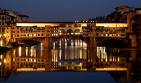
One of the bridges in particular stands out as being unique — The Ponte Vecchio (Old Bridge), whose most striking feature is the multitude of shops built upon its edges, held up by stilts. The bridge also carries Vasari's elevated corridor linking the Uffizi to the Medici residence (Palazzo Pitti). Although the original bridge was constructed by the Etruscans, the current bridge was rebuilt in the 14th century. It is the only bridge in the city to have survived World War II intact.
The church of San Lorenzo contains the Medici Chapel, the mausoleum of the Medici family – the most powerful family in Florence from the 15th to the 18th century. Nearby is the Uffizi Gallery, one of the finest art museums in the world – founded on a large bequest from the last member of the Medici family.
The Uffizi itself is located at the corner of Piazza della Signoria, a site important for being the centre of Florence's civil life and government for centuries. (Signoria Palace is still home of the community government.) The Loggia dei Lanzi provided the setting for all the public ceremonies of the republican government. Many significant episodes in the history of art and political changes were staged here, such as:
- In 1301, Dante was sent into exile from here (commemorated by a plaque on one of the walls of the Uffizi). - On 26 April 1478, Jacopo de'Pazzi and his retainers tried to raise the city against the Medici after the plot known as The congiura dei Pazzi (The Pazzi conspiracy), murdering Giuliano di Piero de' Medici and wounding his brother Lorenzo. All the members of the plot who could be apprehended were seized by the Florentines and hanged from the windows of the palace. - In 1497, it was the location of the Bonfire of the Vanities instigated by the Dominican friar and preacher Girolamo Savonarola On 23 May 1498, the same Savonarola and two followers were hanged and burnt at the stake. (A round plate in the ground marks the spot where he was hanged) - In 1504, Michelangelo's David (now replaced by a replica, since the original was moved indoors to the Accademia dell'Arte del Disegno) was installed in front of the Palazzo della Signoria (also known as Palazzo Vecchio). The Piazza della Signoria is the location of a number of statues by other sculptors such as Donatello, Giambologna, Ammannati and Cellini, although some have been replaced with copies to preserve the priceless originals.
In addition to the Uffizi, Florence has other world-class museums. The Bargello concentrates on sculpture, containing many priceless works by sculptors including Donatello, Giambologna and Michelangelo. The Accademia dell'Arte del Disegno (often simply called the Accademia) collection's highlights are Michelangelo's David and his unfinished Slaves.
Across the Arno is the huge Palazzo Pitti, containing part of the Medici family's former private collection. In addition to the Medici collection, the palace's galleries contain many Renaissance works, including several by Raphael and Titian, large collections of costumes, ceremonial carriages, siver, porcelain and a gallery of modern art dating from the eighteenth century. Adjoining the palace are the Boboli Gardens, elaborately landscaped and with many interesting sculptures.
The Santa Croce basilica, originally a Franciscan foundation, contains the monumental tombs of Galileo, Michelangelo, Machiavelli, Dante (actually a cenotaph), and many other notables.
Other important basilicas and churches in Florence include Santa Maria Novella, San Lorenzo, Santo Spirito and the Orsanmichele, and the Tempio Maggiore Great Synagogue of Florence.
Hotel Mario's suggests a further visit: Boboli Gardens. They were not famous until the land became the property of the Medici family, who called in Niccolò Pericoli, known as Tribolo, to design them; this artist created a masterpiece of "landscape architecture" between 1550 and 1558. Parks in Florence: BoboliThe park, on the property of the Pitti Palace, was planned to occupy a scenographic setting on the slopes of the Boboli hill (covering 320.000 square metres) and also had access from the square. The park was enriched with many Mannerist inventions by Buontalenti (like the Grotta Grande), fountains and statues by Ammannati, Giambologna and Tacca, and was eventually completed by Giulio and Alfonso Parigi (1631- 1656). The two architects, father and son, carried out the stone Amphitheatre, the unique setting for many celebrated theatrical performances, the cypress alley known as the "Viottolone" and the square and pool of Isolotto. The last additions, like the Coffeehouse (1774-76), the Lawn of the Columns (1776) and the Lemonary (1785), were later installed by the Lorriane family. Pietro Leopoldo decided to open the garden to the public in 1776. The design of the Boboli Gardens was used as a basis for all the royal gardens in Europe, including Versailles.
Mario's Hotel's staff helps you in visiting Fiesole. Fiesole(Vipsul) was probably founded in the 9th-8th century BC, as it was an important member of the Etruscan confederacy, as may be seen from the remains of its ancient walls. The first recorded mention on the town dates to 283 BC, when the town, then known as Faesulae, was conquered by the Romans. In pagan antiquity it was the seat of a famous school of augurs, and every year twelve young men were sent thither from Rome to study the art of divination. Sulla colonized it with veterans, who afterwards, under the leadership of Gaius Mallius, supported the cause of Catilina. Fiesole was the scene of Stilicho's great victory over the Germanic hordes of the Vandals and Suevi under Radagaisus in 406. During the Gothic War (536-53) the town was several times besieged. In 539 Justinus, the Byzantine general, captured it and razed its fortifications. It was an independent town for several centuries in the early Middle Ages, no less powerful than Florence in the valley below, and many wars arose between them; in 1010 and 1025 Fiesole was sacked by the Florentines, before it was conquered by Florence in 1125, and its leading families obliged to take up their residence in Florence. By the 14th century, rich Florentines had countryside villas in Fiesole, and one of them is the setting of the frame narrative of the Decameron, also Boccaccio wrote the poem "Ninfale fiesolano". Robert Browning also mentions "sober pleasant Fiesole" several times in his poem, Andrea del Sarto.
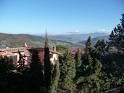
Florence keeps an exceptional artistic heritage, marvelous evidence of its secular civilization. The works of great Italian art, Cimabue, Giotto, Brunelleschi, Donatello, Leonardo, Michelangelo, are gathered in numerous museums including the Uffizi, a key step for those visiting the Tuscan capital. Great monuments are the landmarks florentine artistic culture: the Baptistry, the Duomo, the medieval churches, the public and private buildings, monasteries and cloisters, monasteries and the Certosa. World Heritage Site recognized by UNESCO in 1982, the historic center of Florence, enclosed by a circle of paths traced over the old medieval walls, collects the most important cultural heritage of the city. The old town can be appreciated in its entirety from the surrounding hills, especially by the Forte Belvedere, from the Piazzale Michelangelo with the Romanesque Basilica of San Miniato al Monte and the hills of Fiesole, which offers one of the most beautiful views of Arno valley.
The Vasari Corridor (Italian: Corridoio Vasariano) is an elevated enclosed passageway in Florence, which connects the Palazzo Vecchio with the Palazzo Pitti. Beginning on the south side of the Palazzo Vecchio, it then joins the Uffizi Gallery and leaves on its south side, crossing the Lungarno dei Archibusieri and then following the north bank of the River Arno until it crosses the Ponte Vecchio. At the time of construction the Torre dei Mannelli had to be built around using brackets because the owners of the tower refused to alter it. The corridor covers up part of the façade of the chiesa di Santa Felicità. The corridor then snakes its way over rows of houses in the Oltrarno district, becoming narrower, to finally join the Palazzo Pitti. Most of it is closed to visitors. The Vasari Corridor was built in 5 months by order of Grand Duke Cosimo I de' Medici in 1564, to the design of Giorgio Vasari. It was commissioned in connection with the marriage of Cosimo's son, Francesco, with Johanna of Austria. The idea of an enclosed passageway was motivated by the Grand Duke's desire to move freely between his residence and the government palace, when, like most monarchs of the period, he felt insecure in public, in his case especially because he had replaced the Republic of Florence. The meat market of Ponte Vecchio was moved to avoid its smell reaching into the passage, its place being taken by the goldsmith shops that still occupy the bridge. At the latter extremity, the corridor was forced to pass around the Mannelli's Tower, after the staunch opposition of that family to its destruction. In the middle of Ponte Vecchio the corridor is characterized by a series of panoramic windows facing the Arno, in direction of the Ponte Santa Trinita. These replaced the smaller windows of the original construction in 1939, by order of Benito Mussolini. After the Ponte Vecchio the Corridor passes over the loggiato of the church of Santa Felicita; at that point it had a balcony, protected by a thick railing, looking into the interior of the church, in order to allow the Grand Duke's family to follow services without mixing with the populace.





 Post
Post

